
In Ulrike Ottinger’s film work, everything may undergo a metamorphosis: a pirate manifesto transforms into a feminist fantasy, a vampire glides through contemporary Vienna as if it were her private theatre, Orlando returns in ever new incarnations, and documentary meets unlimited fantasy fiction in a full-fledged cinematic ritual. The 26th edition of TAURON New Horizons International Film Festival is going to celebrate the work of German filmmaker, painter, photographer, screenwriter, producer, and architect of her own worlds; an artist who, since the 1970s has created a singular body of work—baroquely precise, camp, erudite, and forever ready to cross boundaries. The artist will be in attendance in Wrocław for the retrospective opening and a Polish premiere of her latest work, Blood Countess.
The best way to enter Ottinger’s world is as if one entered an old theatre after hours: through dim corridors, past a half-drawn curtain, and into a backstage labyrinth of costumes and props, beyond which new scenes of transformation await. Here, every detail has a meaning, every set piece remembers its own history, and the characters fluidly shift between roles, eras, and realms of imagination.
During the 26th New Horizons, you are invited to join us in such a theater of curiosities: a retrospective of one of the most original personas in European independent cinema. The programme features ten Ulrike Ottinger works —from the early phantasmagorical Laocoon & Sons with constantly transforming Esmeralda del Rio, through an absolute ruler: Madame X, freak version of Orlando and Joan of Arc of Mongolia to Blood Countess, starring Isabelle Huppert and presented in Poland for the first time following its premiere at this year’s Berlinale.
Ottinger’s cinema operates as a machine for shifting perspectives: drawing from surrealism, fairground culture, opera, anthropology, literature, and pop-underground, it builds a mechanism of associations, yet instead of arranging them into a closed catalogue of references, it sets everything in motion. The image becomes a stage, costume a mode of thought, and travel a way of encountering the unfamiliar, the repressed, or that which is too easily dismissed as strange. In Ottinger’s work, reality always has a hidden layer, and fantasy proves to be one of the most sensitive methods of exploring culture.
The retrospective is presented in partnership with the Goethe-Institut in Poland, and the artist’s visit to Wrocław, her meeting with the audience, and the premiere of Blood Countess are also supported by German Films.
Ulrike Ottinger’s world is best entered through the backstage door. At the festival, however, we would advise against slipping in through the side entrance—instead, we recommend securing a pass or accreditation for this year’s edition of New Horizons.
Apply for industry accreditation
And once you’ve settled into your seats, we turn the spotlight over to the retrospective’s curator, Ula Śniegowska.
From Esmeralda del Rio to Blood Countess
Ulrike Ottinger is one of the most original and internationally acclaimed figures of German independent cinema. She was born in 1942 in Konstanz, near Lake Constance. In 1961, she moved to Paris, where she worked as an independent artist while attending lectures in art history, religious studies, and ethnology at the Sorbonne. Since 1973, she has lived in Berlin—a city that has provided the backdrop for many of her art projects.
She first gained international recognition with Madame X: An Absolute Ruler, which opened a surrealist phase of her filmmaking. In the film, myth and reality intertwine in provocative ways, while the subversion of filmic conventional rules and cultural stereotypes emerges as one of her major strategies. Ottinger’s films are often interpreted as feminist, but today her early work can also be read as spearheading queer consciousness and aesthetics. The formal hybridity, genre fluidity, and rich intertextuality of her work position Ottinger both as an heir to surrealism and as a pioneer of contemporary sensibility of (and in) transition and fluid identities.
In early works such as The Image of Dorian Gray in the Yellow Press, Ottinger embraces a camp sensibility rooted in kitsch and excess. She casts icons of the German pop underground—often in gender-defying roles—including Tabea Blumenschein, Magdalena Montezuma, Veruschka von Lehndorff, and Nina Hagen, alongside actors associated with the cinema of Rainer Werner Fassbinder and internationally renowned performers such as Delphine Seyrig. Her latest film, Blood Countess, features Isabelle Huppert and drag performer Conchita Wurst.
Since the late 1980s, Ottinger’s work—most notably Joan of Arc of Mongolia—has reflected a growing interest in Eastern cultures and raised questions about how ancient traditions might be translated into the language of the present. Her expressionistic approach to costume and composition, as well as her search for unconventional locations, have become hallmarks of her style. Anthropological explorations of Asian cultures and societies recur throughout Ottinger’s documentary and hybrid works, including Exile Shanghai (1997) and The Korean Wedding Chest (2009). As both films have previously been screened at New Horizons, they are not included in this year’s retrospective. Instead, the programme focuses on themes that culminate in Ottinger’s latest feature, Blood Countess, presented in Poland for the first time following its premiere at this year’s Berlinale.
In an interview for Pełna Sala conducted by Julia Palmowska, Ottinger describes her creative method by drawing a connection between Joan of Arc of Mongolia—which premiered at the Berlinale in 1989 and returned to the festival this year—and Blood Countess, which will also be screened at New Horizons as part of the Midnight Madness section:
Both [films] are very characteristic of my way of bringing together different times and cultures. I’m interested in the dialogues and misunderstandings between eras and environments. I never think in terms of linear stories—always in terms of overlapping layers. That’s what fascinates me the most.
While Joan of Arc of Mongolia takes us on a journey across the continent, Blood Countess becomes a journey through time—to Vienna remembered by its titular murderess and here - vampiress. Speaking about the city that inspired the film, Ottinger observes:
[Time travel] also concerns the history of places, locations, architecture, and churches. Once you begin exploring their histories, you discover that they can be beautiful, but also so bizarre or grotesque that half the screenplay is already there.
The two documentaries included in the retrospective—Prater (2007) and Paris Calligrammes—can be seen as key points of entry into Blood Countess and the broader themes that run through Ottinger’s work. In Prater, the director uses Vienna’s iconic amusement park as a lens through which to explore questions of normativity and the treatment of those marginalized by the society, while also reminding us of the importance of laughter and simple entertainment. In Paris Calligrammes, meanwhile, Ottinger portrays the legendary Parisian bookstore as a hub of intellectual and artistic exchange that shaped generations of creative minds, including her own.
Ottinger writes, directs, produces, and often serves as cinematographer on her films. With the exception of her latest feature—photographed by Martin Gschlacht (Club Zero, The Devil’s Bath)—she oversees virtually every aspect of the filmmaking process herself. As she explains:
Images are very important to me; I approach my work like a Baroque painter. Every detail has something to say. And costumes are just as important to me as locations and actors.
Her body of work encompasses both films rooted in the tradition of surrealist theatre—with their elaborate stylistics and meticulously constructed fictional worlds—and documentaries and film essays informed by an ethnographic sensibility. The recipient of numerous awards, Ottinger also works in opera and theatre. Retrospectives of her films have been presented in cities including Paris and New York, and in Warsaw as early as 1997. In 2008, the Ujazdowski Castle - Centre for Contemporary Art hosted a comprehensive retrospective of her films alongside a monographic exhibition, organized in collaboration with the Deutsche Kinemathek – Museum für Film und Fernsehen, showcasing the many dimensions of her artistic practice: from set designs, costumes, and props to photographs and documentation of her creative process.
The ten films included in this retrospective, presented in collaboration with the Goethe-Institut, trace themes that have shaped Ottinger’s work from the very beginning and find their culmination in her latest film, Blood Countess: an engagement with fairground and popular culture, the subversion of cultural stereotypes, rich intertextual references, a surrealist sensibility and associative logic, and a fluid approach to genre, identity, and normativity.
The artist’s masterclass will be led by Dr. Barbara Wurm, head of the Berlinale Forum.
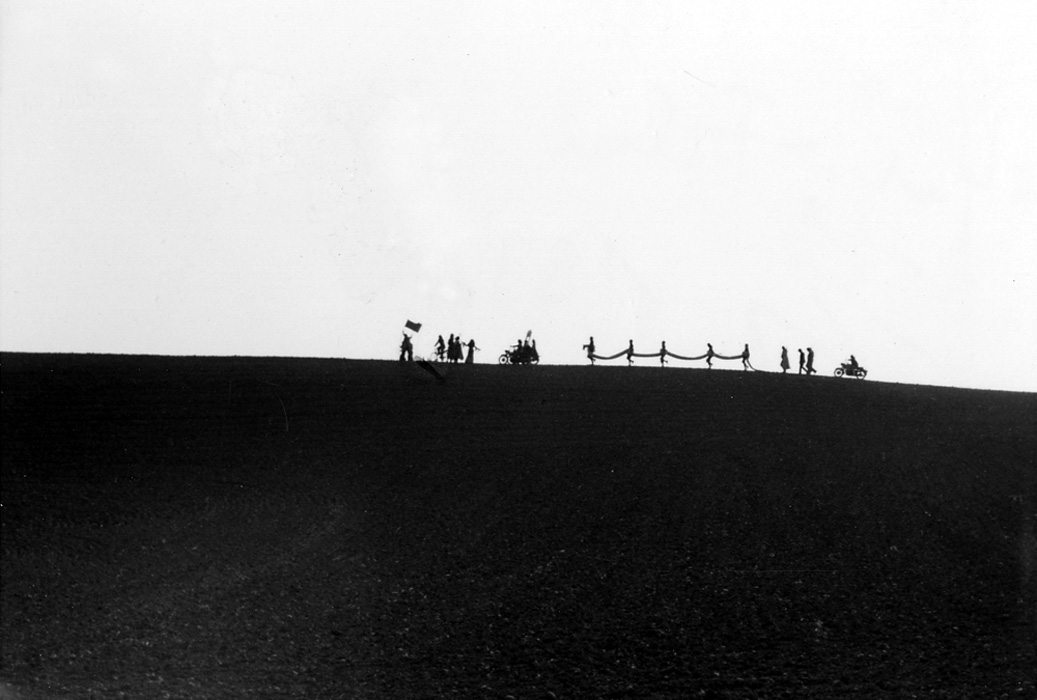
Laocoon & Sons
Retrospective features:
Laocoon & Sons
Germany, 1972/73, 50’ min
The Enchantment of the Blue Sailors
Germany, 1975, 50 min
Madame X: An Absolute Ruler
Germany, 1977, 141 min
Ticket of No Return
Germany, 1979, 107 min
Freak Orlando
Austria / Germany, 1981, 126 min
The Image of Dorian Gray in the Yellow Press
Germany, 1984, 150 min
Joan of Arc of Mongolia
West Germany / France, 1989, 165 min
Prater
Austria / Germany, 2007, 104 min
Paris Calligrammes
Germany / France, 2019, 129 min
Blood Countess
Austria / Luxembourg / Germany, 2026, 119 min
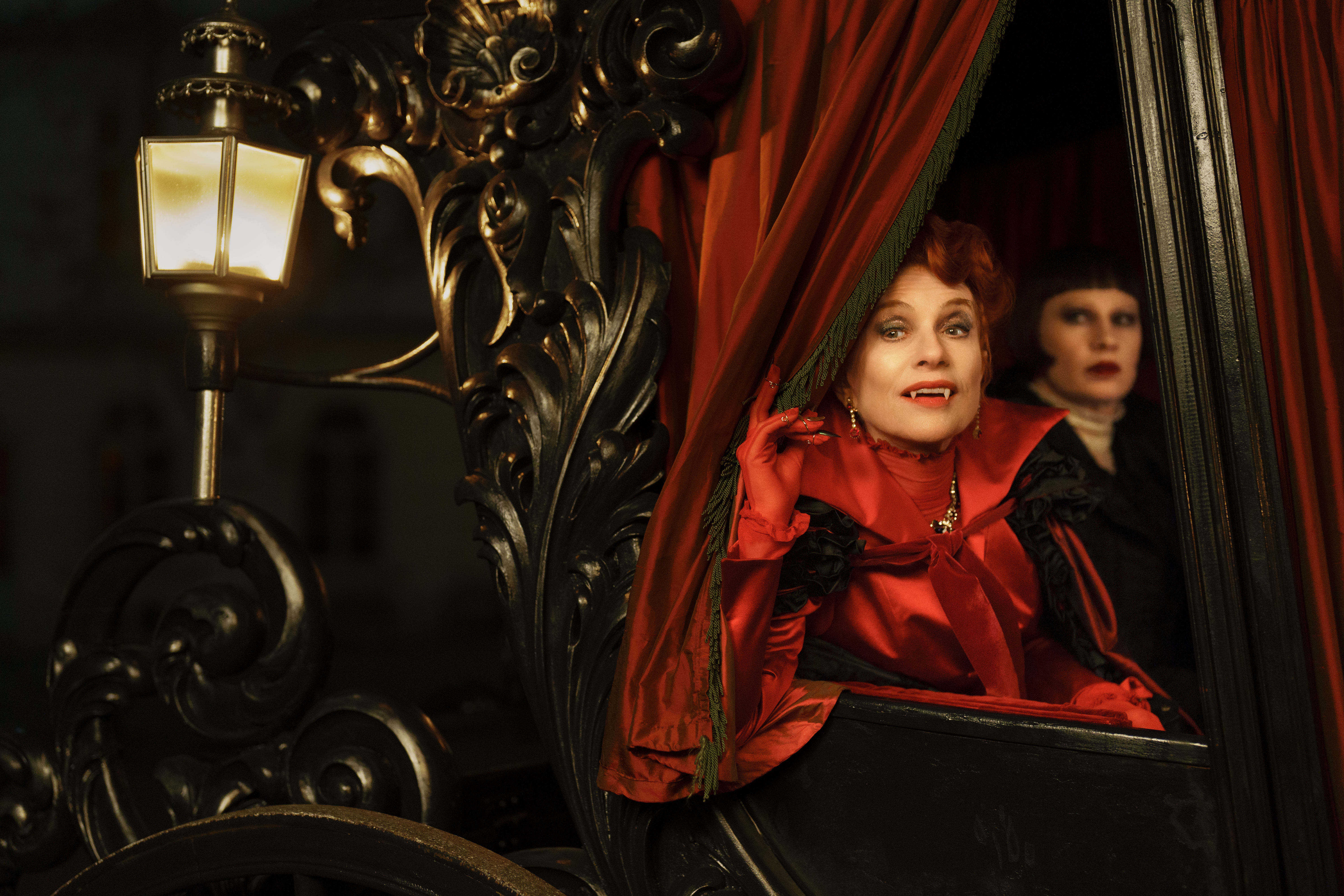
Blood Countess
The section’s media partner is Pełna Sala.