Julian Józef Antoniusz, set 1
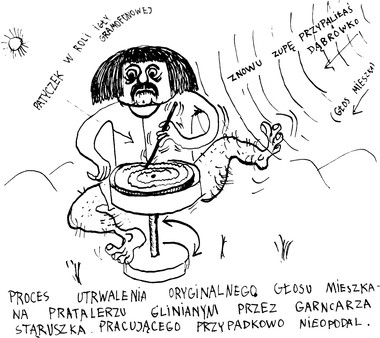
Anima (episode 12 of the TV series)
Polska 2000, 20'
direktor: Jerzy Armata
screenplay: Jerzy Armata
cinematography: Henryk Kępa
production: TOProduction dla TVP Polonia
source: Telewizja Polska S.A.
language: polska
Anima is an original series by Jerzy Armata, composed of 34 episodes and realized by the company TOProduction in 2000-2002 for TVP Polonia. It presents the work of prominent Polish animators. The 12th episode was devoted to the creative work of Julian Józef Antonisz. Different people speak here about this artist from Kraków: the director's daughters, Sabina and Malwina, his close friend, Krzysztof Gradowski and the series' author.
The Phobia
Poland 1967, 11'
director: Julian Józef Antonisz
screenplay: Julian Józef Antonisz
cinematography: Kazimierz Urbański
music: Eugeniusz Rudnik
production: Studio Filmów Animowanych w Krakowie - Studio Miniatur Filmowych w Warszawie
source: Filmoteka Narodowa
awards: MFFK Oberhausen 1984 - wyróżnienie specjalne jury FICC
language: polska
I'm bored with everything, I guess I will cause some kind of a scandal - confesses the film's hero, Fobian Ewaryst Dobdziak, a painter searching for inspiration in nature, which - unfortunately - is decaying as well.
Nailed by Sex
Polska 1969, 12'
director: Julian Józef Antonisz
screenplay: Julian Józef Antonisz
cinematography: Henryk Makarewicz
music: Julian Józef Antonisz
cast: Teresa Hrynkiewicz-Dymna, Mieczysław Święcicki, Jerzy Cnota, Franciszek Miecznikowski, Ryszard Przewłocki, Krzysztof Raynoch
production: Studio Filmów Animowanych w Krakowie - Studio Miniatur Filmowych w Warszawie
source: Filmoteka Narodowa
language: polska
A girl puts a marriage announcement in a newspaper. Unfortunately, she is unable to fall in love with any of the "bidders". Her heart melts only in front of the famous singer, Mieczysław Święcicki.
How Come There's a Bear on the Screen?
Polska 1970, 7'
director: Julian Józef Antonisz
screenplay: Julian Józef Antonisz (na podstawie własnej książki)
cinematography: Jan Tkaczyk
music: Julian Józef Antonisz
production: Studio Filmów Animowanych w Krakowie - Studio Miniatur Filmowych w Warszawie
source: Filmoteka Narodowa
language: polska
An entertaining lecture on the technical functioning of television and the process of creation of a TV show.
Out of the Woods
Polska 1970, 9'
director: Julian Józef Antonisz
screenplay: Julian Józef Antonisz
cinematography: Jan Tkaczyk
music: Julian Józef Antonisz
production: Studio Filmów Animowanych w Krakowie - Studio Miniatur Filmowych w Warszawie
source: Filmoteka Narodowa
awards: OFF dla Dzieci i Młodzieży Poznań 1971 - Złote Koziołki
language: polska
A lecture on how a book is created meant for the youngest audience. First it describes in an intelligible and amusing way the production of paper, and then it talks about work at a printing-house.
How Does a Sausage Dog Work
Polska 1971, 9'
director: Julian Józef Antonisz
screenplay: Julian Józef Antonisz
cinematography: Jan Tkaczyk
music: Julian Józef Antonisz
production: Studio Filmów Animowanych w Krakowie - Studio Miniatur Filmowych w Warszawie
source: Filmoteka Narodowa
awards: OFFK Kraków 1972 - Brązowy Lajkonik, MFF Mannheim 1972 - Międzynarodowa Nagroda Ewangelicka, Wyróżnienie Międzynarodowego Ewangelicznego Centrum Filmowego, OPF "Człowiek i jego środowisko" Katowice 1972 - Srebrny Feniks
language: polska
A surprising lecture on the structure of a sausage dog and how it works, proving that live organisms are better than even the most complicated mechanisms.
A Thousand and One Trifles
Polska 1972, 9'
director: Julian Józef Antonisz
screenplay: Julian Józef Antonisz
cinematography: Jan Tkaczyk
music: Julian Józef Antonisz
production: Studio Filmów Animowanych w Krakowie - Studio Miniatur Filmowych w Warszawie
source: Filmoteka Narodowa
language: polska
With a series of gags the film is a warning against the devaluation of some vital moral values.
Polish Frights
Polska 1973, 11'
director: Julian Józef Antonisz
screenplay: Julian Józef Antonisz, Franek Miecznikowski
cinematography: Mieczysław Poznański
music: Julian Józef Antonisz
production: Studio Filmów Animowanych w Krakowie - Studio Miniatur Filmowych w Warszawie
source: Filmoteka Narodowa
language: polska
An amusing story about the origins of statehood of the Slavic tribes on the Wisła. The Slavs' calm lives are disturbed by strange and violent monsters, which destroy everything they see. On the ruins and ashes, a white eagle is born, the symbol of a arising nation.
...The Marvellous Bubbles in the Throbbing Lymphocytes
Polska 1973, 9 min
director: Julian Józef Antonisz
screenplay: Julian Józef Antonisz
cinematography: Mieczysław Poznański
music: Julian Józef Antonisz
cast: Mieczysław Święcicki
production: Studio Filmów Animowanych w Krakowie - Studio Miniatur Filmowych w Warszawie
source: Filmoteka Narodowa
language: polska
A warning against the fatal consequences of smoking tobacco. A suggestive picture of lungs, gradually but consequently destroyed by nicotine, accompanied by expressive comments read by Kazimierz Opaliński.
A Thousand and One Trifles
How Come There’s a Bear on the Screen?
How Does a Sausage Dog Work
Julian Józef Antoniusz (episode 12 of the TV series Anima)
Nailed by Sex
Out of the Woods
Polish Frihgts
…The Marvellous Bubbles In the Throbbing Lymphocytes
The Phobia
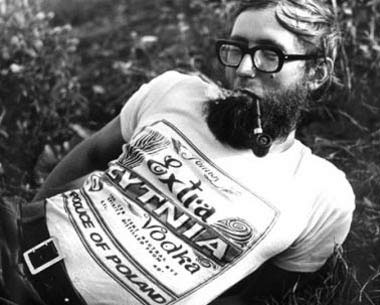
Julian Józef Antonisz (real name: Antoniszczak) - screenwriter, visual designer, combined and non-camera film director, composer, inventor. Born on 8.11.1941 in Nowy Sącz. He was the brother of Ryszard Antoniszczak (Richard Antonius) and the husband of Danuta Zadrzyńska, who helped to realize the majority of his films (colourist, assistant director). He graduated from secondary music school and graduated from the Faculty of Painting and Graphic Art of the Academy of Fine Arts in Kraków (1965), where he also studied at the Film Drawing Lab, headed by Kazimierz Urbański. The co-founder of Studio Filmów Animowanych (Animation Film Atelier) in Kraków. His directorial debut was in 1967 and from 1977 he consistently realized non-camera films (drawn or painted directly on film reel). His experiments concerned non-camera sound as well. His films are examples of the art of absurd humour, they are often reflective, an avalanche of astonishing ideas in an expressive and rhythmic form. He is the hero of the TV film by Krzysztof Gradowski, entitled Non camera (1980). He died on 31.01.1987 in Lubień near Myślenice while working on the thirteenth edition of The Polish non-Camera Newsreel. He received numerous festival awards.
Filmography:
1967 Fobia/ The Phobia
1969 W szponach sexu/ Nailed by Sex
1970 Jak to się dzieje, pyta Agnisia, że na ekranie widzimy misia/ How Come There's a Bear on the Screen?
1970 Jak nauka wyszła z lasu/ Out of the Woods
1971 Jak działa jamniczek/ How Does a Sausage Dog Work
1972 Tysiąc i jeden drobiazgów/ A Thousand and One Trifles
1973 Strachy na Lachy/ Polish Frights
1973 ...Te wspaniałe bąbelki w tych pulsujących limfocytach/ ...The Marvellous Bubbles in the Throbbing Lymphocytes
1974 Kilka praktycznych sposobów na przedłużenie sobie życia/ Practical Advice on how to Prolong Your Life
1975 Film o sztuce... (biurowej)/ Office Art Movie
1976 Bajeczka międzyplanetarna/ The Interplanetary Tale
1976 Film grozy/ Horror film
1977 Słońce -film bez kamery/ The Sun: A Non-Camera Film
1977 Katastrofa (non camera)/ The Disaster (non-camera)
1978 Ludzie więdną jak liście... Film bez kamery/ People Wither Like Leaves... A Non-Camera Film
1978 Dziadowski blues non camera, czyli nogami do przodu/ A Beggar's Blues Non Camera or the Bucket Kicked
1978 Co widzimy po zamknięciu oczu i zatkaniu sobie uszu. Film noncamerowy/ What We Can See with Our Eyes and Ears Shut. A Non-Camera Film
1979 Ostry film zaangażowany. Non camera/ Sharp Involved Film. A Non-Camera
1980 Pan Tadeusz. Księga I. Gospodarstwo/ Sir Thaddeus. Book One. The Estate
1980 Dokument animowany non camera, czyli reżyser Krzysztof Gradowski o sobie/ A Documentary Cartoon Non Camera, or the Director Krzysztof Gradowski about Himself
1981 Polska Kronika Non-Camerowa nr 1/ The Polish Non-Camera Newsreel no 1
1981 Polska Kronika Non-Camerowa nr 2/ The Polish Non-Camera Newsreel no 2
1982 Polska Kronika Non-Camerowa nr 3/ The Polish Non-Camera Newsreel no 3
1982 Polska Kronika Non-Camerowa nr 4 1982 Wydanie B/ The Polish Non-Camera Newsreel no 4, 1982, Edition B
1983 Dodatkowe wole trawienne magistra Kiziołła/ The Additional Digestive Goitre of Magister Kiziołł
1983 Polska Kronika Non-Camerowa nr 5 1983 Wydanie A/ The Polish Non-Camera Newsreel no 5,1983, Edition A
1983 Polska Kronika Non-Camerowa nr 6 1983 Wydanie B/ The Polish Non-Camera Newsreel no 6, 1983, Edition B
1984 Oberhausen, Duisburg, Dortmund, Dusseldorf, Hannover, Hamburg, czyli non-camerowy reportaż z podróży po Republice Federalnej Niemiec/ Oberhausen, Duisburg, Dortmund, Dusseldorf, Hanover, Hamburg, or a Non-Camera Coverage of a Journey to the Federal Republic of Germany
1984 Polska Kronika Non-Camerowa nr 7 1984 Wydanie Export Color/ The Polish Non-Camera Newsreel no 7, 1984, Edition Export Colour
1985 Czyżby wolny rynek w organizmie biologicznym?/ Would It be Free Trade in a Biological Organism?
1985 Polska Kronika Non-Camerowa nr 8 1985 Wydanie A/ The Polish Non-Camera Newsreel no 8,1985, Edition A
1985 Polska Kronika Non-Camerowa nr 9 1985 Wydanie B/ The Polish Non-Camera Newsreel no 8,1985, Edition A
1985 Polska Kronika Non-Camerowa nr 10 1985 Wydanie B/ The Polish Non-Camera Newsreel no 9, 1985, Edition B
1985 Światło w tunelu/ Light at the End of the Tunnel
1986 Polska Kronika Rysunkowa Animowana Non-Camerowa 11 1986 Wydanie A/ The Polish Animated Cartoon Non-Camera Newsreel no 11, 1986, Edition A
1986 Polska Kronika Animowana Rysunkowa Non-Camerowa nr 12 Wyd. B 1986/ The Polish Animated Cartoon Non-Camera Newsreel no 12, Edition B, 1986